Riding a bike offers unparalleled freedom, a chance to explore your city, commute sustainably, or simply enjoy the open road. But with this freedom comes a persistent worry: bike theft. In the blink of an eye, your beloved ride can disappear, leaving you heartbroken and stranded. This is where a reliable bike lock becomes your most trusted companion, and few brands stand as tall in the realm of robust security as OnGuard. An OnGuard bike U-lock isn’t just a piece of metal; it’s a promise of peace of mind, built to withstand the toughest challenges thieves can throw its way.
The Unsung Hero: Why U-Locks Are Essential for Bike Security
For decades, the U-lock has been the gold standard for bicycle security, and for good reason. Its rigid, hardened steel shackle and robust locking mechanism offer a formidable deterrent against opportunistic and even determined thieves. Unlike flexible cable locks that can be snipped in seconds, a quality U-lock demands serious effort and specialized tools to defeat. It’s a physical barrier that forces a thief to weigh the risk and reward, often prompting them to move on to an easier target. When you choose an OnGuard bike U-lock, you’re not just buying a lock; you’re investing in a legacy of preventing theft, giving your bike the fighting chance it deserves.
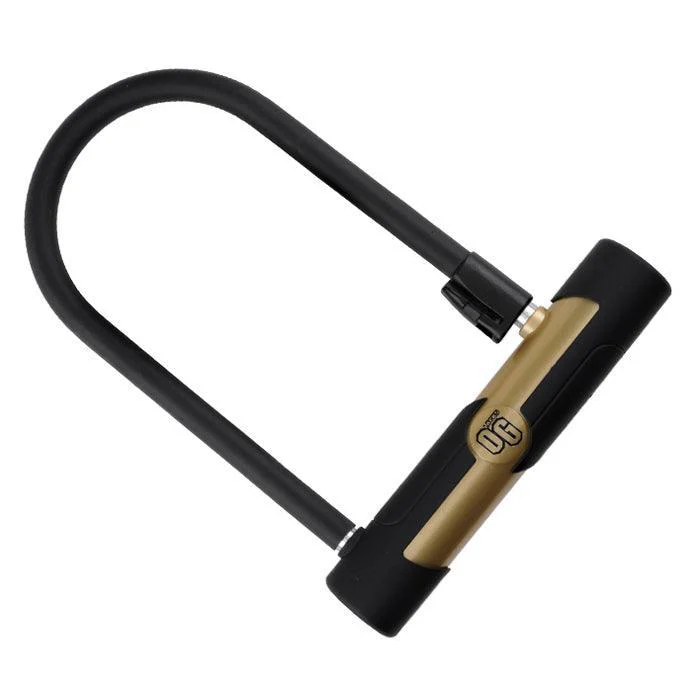
Understanding Your OnGuard Bike U-Lock: Design and Innovation
What sets an OnGuard bike U-lock apart in a crowded market? It’s a combination of thoughtful engineering and a commitment to rider security. At their core, OnGuard U-locks feature hardened steel shackles, engineered to resist cutting, prying, and jacking attacks. Many models incorporate advanced locking mechanisms, such as double or quad-locking systems (like their X4P Quattrobolt), which secure the shackle on both or all four sides, meaning a thief would need to cut the shackle twice (or more) to open the lock. Beyond the brawn, OnGuard also prioritizes user experience. Their bump-resistant cylinders, often paired with laser-cut keys (and usually a spare with an LED light for nighttime fumbling!), ensure smooth operation while deterring picking attempts. The fully coated exteriors protect your bike’s paintwork from scratches and shield the internal components from the elements, ensuring your lock remains reliable ride after ride.
Meet the Guardians: Popular OnGuard U-Lock Models
OnGuard offers a range of U-locks, each designed with varying levels of security and features to suit different needs and budgets. Understanding the differences helps you choose the perfect guardian for your bike.
OnGuard Bulldog DT: The Agile Defender
The OnGuard Bulldog DT is a fantastic choice for many urban cyclists. It strikes an excellent balance between security, portability, and affordability. Featuring a 13mm hardened steel shackle and a double-locking mechanism, it offers “high” security according to OnGuard’s own rating and typically earns a Sold Secure Silver rating from independent testers. Its slightly wider shackle can offer more versatile locking options, and at around 2.43 lbs (1.10 kg), it’s one of the lighter 9-inch U-locks available, making it easy to carry. While it often comes with a complementary cable, remember that these cables offer minimal security and are best used for securing accessories rather than as a primary lock. It’s an ideal OnGuard bike U-lock for mid-value bikes and moderately high-risk areas.
OnGuard Brute STD: The Heavyweight Champion
For those seeking maximum deterrence without breaking the bank, the OnGuard Brute STD (often seen with a 16mm or 17mm shackle like the Model 8001) is a formidable contender. This lock is built like a tank, offering “ultimate” security and frequently achieving high ratings, often comparable to more expensive high-end locks. The Brute series is renowned for its resilience, with some models designed to withstand up to 10 tons of pulling force. If you’re parking an expensive bike in a high-theft area or leaving it unattended for longer periods, the Brute provides that extra layer of confidence. Despite its substantial build, it often includes a reliable frame mount and five keys (one with a handy LED light) for convenience. This OnGuard bike U-lock means business.
OnGuard Pitbull STD: The Diamond Standard
Stepping up to the OnGuard Pitbull STD (such as the 8003 or 8006 models) brings you into the realm of Sold Secure Diamond-rated protection. This is the highest level of independent certification, often required by insurance companies for higher-value bikes. Pitbull U-locks typically feature OnGuard’s X4P Quattrobolt locking mechanism, securing the shackle on all sides. While incredibly secure, their larger size and heavier weight might make them unwieldy for smaller frames. However, for e-bikes, cargo bikes, or any high-value bicycle where security is paramount and frame space allows, the Pitbull is an accessible choice for top-tier protection.
Choosing Your Fortress: Finding the Perfect OnGuard U-Lock
Selecting the right OnGuard bike U-lock isn’t a one-size-fits-all decision. It involves considering several factors that influence the level of security you truly need:
- Your Bike’s Value: A $200 bike might not warrant the same lock as a $2000 e-bike. The more valuable your ride, the higher the security rating you should aim for.
- Theft Risk Area: Parking in a busy, well-lit city center with high bike theft rates demands a much stronger lock than securing your bike in a suburban garage. Major cities and college campuses are notorious hotspots.
- Duration of Locking: A quick coffee stop requires less security than leaving your bike overnight. The longer your bike is unattended, the more robust your lock should be.
- Portability and Weight: Stronger locks are generally heavier. Consider how you’ll carry your OnGuard bike U-lock – in a bag, attached to a frame mount, or around your waist. The ease of transport can sometimes influence whether you actually use the lock consistently.
- Lock Size: A snug fit is crucial. A smaller U-lock leaves less space for thieves to insert leverage tools. Make sure your chosen U-lock can comfortably encompass your bike frame, a wheel, and the fixed object you’re locking to.
Lock It Down Right: Mastering Your OnGuard U-Lock for Maximum Protection
Even the toughest OnGuard bike U-lock is only as good as how you use it. Proper locking technique is your second line of defense.
The “Sheldon Brown” Method and Beyond
A widely recommended strategy, often called the “Sheldon Brown” method, focuses on securing the rear wheel within the bike’s rear triangle and the fixed object. This minimizes space and makes it difficult to remove the wheel or frame without damaging both.
Here’s a breakdown of best practices for securing your bike:
- Anchor Point is Key: Always lock your bike to a fixed, immovable object like a dedicated bike rack, a sturdy street sign post that’s securely bolted down, or a strong pole. Avoid anything that can be easily cut, lifted, or broken, like thin fences or small trees.
- Frame and Wheel First: The golden rule: always lock your bike’s frame to the immovable object. Ideally, pass your OnGuard bike U-lock through the rear wheel’s rim, the rear triangle of your frame, and then around the fixed object. This secures both the most expensive wheel and the frame with one primary lock.
- Minimize Space: The less empty space inside your U-lock, the better. Fill the “U” with as much of your bike (frame, wheel) and the fixed object as possible. This denies thieves the leverage needed for bottle jack or pry bar attacks.
- High and Tight: Position your lock as high off the ground as possible. This prevents thieves from using the ground for leverage or as an anvil to smash the lock. Also, try to position the keyhole facing downwards, making it harder to pick or tamper with.
“Proper locking posture isn’t just about deterring a thief; it’s about making their job as difficult, noisy, and time-consuming as possible,” advises Detective Mark Jensen, a retired police officer specializing in property crime prevention. “A well-secured bike using an OnGuard U-lock, placed correctly, tells a thief to look elsewhere.”
Beyond the U-Lock: Combining with Other Defenses
While your OnGuard bike U-lock is the primary deterrent, consider supplementing it, especially for quick-release components. A thin cable lock, though easily cut, can be threaded through your front wheel, seat, and other accessories, then looped back and secured by your U-lock. This creates a secondary psychological barrier and protects easily removable parts. Removing quick-release items like seats or even your front wheel (if using a smaller U-lock) and taking them with you is another excellent strategy.
Common Mistakes to Avoid
- Locking Only the Wheel: A common oversight. If only your wheel is locked, a thief can easily remove it and walk away with your frame.
- Leaving Too Much Space: A large gap within the U-lock is an invitation for leverage tools.
- Weak Anchor Points: Locking to a flimsy fence or a poorly secured sign post defeats the purpose of a strong lock.
- Locking Near the Ground: Makes your lock vulnerable to brute force attacks using the ground for leverage.
Maintaining Your Mean Machine: Keeping Your OnGuard U-Lock in Top Shape
Like any precision instrument, your OnGuard bike U-lock benefits from a little TLC. Regular maintenance ensures smooth operation and extends its lifespan, protecting your investment for years.
- Lubrication is Key: Periodically lubricate the keyway and shackle openings with a light machine oil. This keeps the internal mechanisms moving freely and prevents seizing. Important: Avoid using graphite-based lubricants, as they can sometimes gum up the intricate parts of your lock.
- Keep it Clean: If your lock is exposed to the elements frequently, it might accumulate dirt and grime. For a deeper clean, submerse the lock overnight in kerosene, let it dry thoroughly, then re-lubricate.
- Check for Wear: Occasionally inspect your U-lock for signs of wear, rust, or damage. While OnGuard locks are built tough, extreme conditions or attempted theft can take a toll. A compromised lock should be replaced.
FAQs about OnGuard Bike U-Locks
Q: Are OnGuard locks truly pick-resistant?
A: OnGuard U-locks are designed with bump-resistant cylinders and often use complex key designs (like laser-cut keys and Z-key systems) to deter picking. While no lock is absolutely pick-proof against a highly skilled professional with ample time and the right tools (as demonstrated by some lock-picking experts), OnGuard locks offer a very high level of resistance against opportunistic thieves and are generally considered highly secure in real-world scenarios.
Q: What do security ratings like Sold Secure mean for OnGuard locks?
A: Independent security ratings like Sold Secure (UK) provide an objective assessment of a lock’s resistance to various attack methods. Sold Secure awards ratings like Bronze, Silver, Gold, and Diamond, with Diamond being the highest. OnGuard locks frequently achieve Silver, Gold, and even Diamond ratings (e.g., Pitbull series), indicating they’ve been rigorously tested and deemed resistant to professional theft techniques for specific durations. These ratings are crucial for insurance purposes and for understanding a lock’s true strength.
Q: Can I use an OnGuard U-lock with a quick-release wheel?
A: Yes, you absolutely can. If your bike has quick-release wheels, it’s even more crucial to lock them properly. The ideal method is to include one wheel (preferably the rear) within your main U-lock alongside the frame and the fixed object. For the other wheel or any quick-release seat, you can use a secondary cable lock looped through and secured by your main OnGuard bike U-lock, or simply remove the component and take it with you.
Q: How do I register my OnGuard key for replacement?
A: OnGuard typically offers a key registration program directly through their website. When you purchase an OnGuard bike U-lock, you’ll usually receive instructions or a key code card. Registering your unique key code allows you to order replacement keys if yours are lost or stolen, saving you from having to replace the entire lock.
Q: What’s the best way to carry my OnGuard U-lock?
A: Many OnGuard U-locks come with a frame mount designed to secure the lock to your bike’s frame while riding. These mounts vary in quality, but generally offer a convenient way to transport your lock. Alternatively, you can carry your U-lock in a backpack or messenger bag. For heavier models like the Brute or Pitbull, some cyclists prefer to carry them in a pannier or specially designed lock holster to distribute the weight more comfortably.
Ride with Confidence: Your OnGuard U-Lock Awaits
Ultimately, the goal of any cyclist is to enjoy their ride without constant worry. An OnGuard bike U-lock provides that essential layer of protection, transforming anxiety into assurance. By understanding the robust engineering behind these locks, choosing the model that fits your specific needs, and employing smart locking techniques, you can significantly reduce the risk of theft. Invest in an OnGuard bike U-lock today and experience the unparalleled peace of mind that comes with knowing your cherished bicycle is truly guarded. Your adventures are waiting, and your bike will be right there with you when you return.